1. The Real Question Coaches Should Be Asking in 2025
Most coaches don’t fail because they can’t get clients.
They fail because their systems collapse under growth.
At first, everything feels manageable. Leads come in. Conversations happen in DMs. Notes live in random docs. Follow-ups are half memory, half chaos. Then momentum hits, and suddenly nothing feels clear anymore. That’s usually when the tool hunt starts.
In 2025, the real tension isn’t which platform has more features. It’s too many tools versus not enough structure, and flexibility versus automation. Coaches want systems that move fast, but they also need systems that actually reflect how they sell, coach, and deliver.
On one side, you have Notion CRM, a highly customizable, founder-controlled system that lets coaches design their CRM around their real workflow, not a generic sales funnel. On the other hand, you have GoHighLevel, an all-in-one automation powerhouse built to capture leads, follow up aggressively, and keep pipelines moving.
This is not a feature list.
This is about how coaches actually work in 2025.
2. What Coaches Actually Need From a CRM in 2025
Before comparing tools, it’s important to get clear on real requirements, not SaaS marketing promises. Most CRMs look great in demos. Very few hold up once a coaching business starts growing.
A. Visibility Over Everything
If you can’t see what’s happening in your pipeline, nothing else matters. Coaches need instant clarity around where leads are coming from, which conversations are active, and where deals are stalling. That means clear stages, clean notes, and the ability to trace outcomes back to specific lead sources. A CRM should surface problems early, not hide them behind dashboards no one checks.
B. Workflow That Matches Human Behavior
Coaching businesses are relationship-driven by nature. Conversations are non-linear. People disappear, come back months later, ask nuanced questions, and need context. Rigid pipelines often break because they assume perfect behavior. A CRM needs room for notes, history, voice memos, decision context, and real human nuance. This is where systems either support how coaches think or quietly work against them.
C. Scalability Without Chaos
Most coaches don’t start with teams, but many plan to build them. A system that works for a solo coach should still work when assistants, setters, or sales reps enter the picture. The goal isn’t constant rebuilding. It’s evolution. Your CRM should scale without forcing a total reset every six months.
D. Ownership and Adaptability
Coaches change offers often. Messaging evolves. Delivery models shift. A CRM needs to adapt at the same speed. Waiting on product updates or locked features creates friction. This is where a Notion CRM can feel radically different from traditional platforms.
Understanding these needs makes it easier to see why one tool can feel “better,” yet still be the wrong fit long term.
3. What Is a Notion CRM (And Why Coaches Are Obsessed With It)
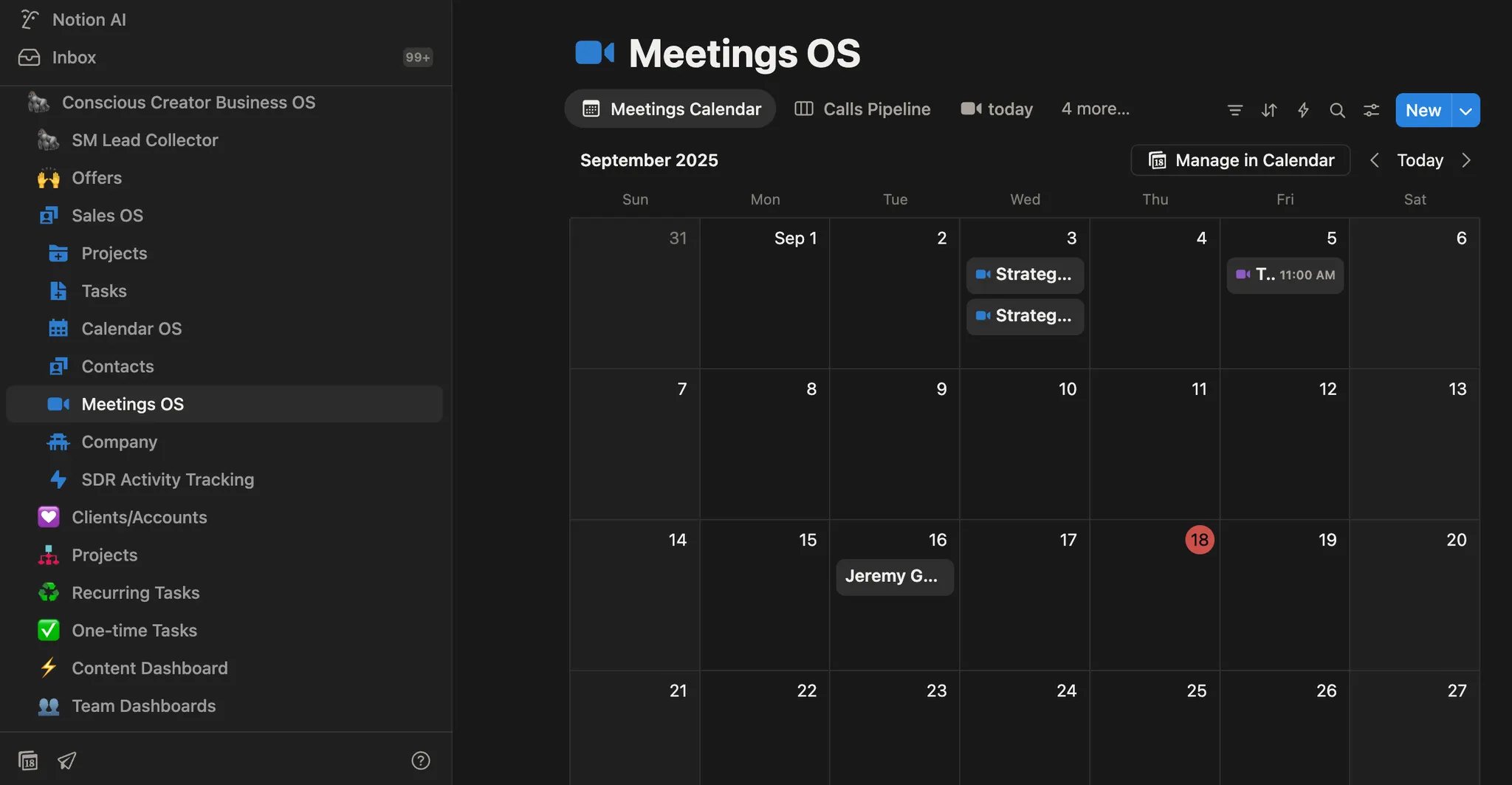
A Notion CRM is not a traditional CRM in the way most people think about CRMs. It doesn’t come with rigid pipelines, locked fields, or a predefined way you’re supposed to sell. Instead, it’s a database-driven operating system that you design around how your coaching business actually runs.
At its core, a Notion CRM is built using databases, relations, views, formulas, and simple workflows. That means you’re not just tracking leads. You’re connecting information. Deals relate to clients. Clients relate to tasks. Tasks relate to revenue. Everything lives in one system that reflects reality, not a funnel diagram.
This flexibility is exactly why coaches gravitate toward Notion CRM. You get complete customization without the clutter. The interface is clean. Nothing is forced. And instead of juggling five different tools, many coaches use Notion as a single home for their CRM, client management, content planning, SOPs, and internal knowledge base.
The core strengths show up quickly. Pipelines are flexible, not fixed. Custom fields aren’t capped or hidden behind paywalls. Notes can be deep and contextual, not squeezed into tiny boxes. Deal views can be personalized for founders, assistants, or sales reps, each seeing only what matters to them.
More importantly, a Notion CRM can connect the full business picture. Leads flow into deals. Deals convert into clients. Clients trigger tasks. Tasks tie back to revenue. You stop guessing where things break because you can actually see it.
The hidden advantage is subtle but powerful. Notion CRM pushes you to think in systems, not software. It forces clarity. And instead of just automating activity, it makes the business visible, which is often the difference between controlled growth and quiet chaos.
4. Where Notion CRM Breaks Down (Be Honest)
A Notion CRM is powerful, but it’s not magic. And pretending it does everything out of the box is how people end up frustrated.
The most obvious limitation is communication. There’s no native calling or SMS. No built-in email sequences. No appointment booking baked in. If your business relies heavily on high-volume outbound, rapid-fire follow-ups, or automated reminders, Notion on its own will feel incomplete.
Automation is another tradeoff. While you can automate a Notion CRM, it usually requires external tools and some upfront thinking. That’s not necessarily a flaw, but it does mean there’s no “turn it on and go” experience. You’re designing workflows, not flipping switches.
For coaches, this has real implications. A Notion CRM isn’t ideal for teams doing hundreds of cold calls a day or running aggressive outbound campaigns. It also requires discipline. If notes don’t get logged or stages don’t get updated, clarity disappears fast.
There’s also a learning curve. To get real value, you either need system design skill or a well-built template. Without that, Notion can turn into a messy collection of pages instead of a clean operating system.
The right way to think about it is simple. A Notion CRM is powerful, but not plug-and-play. It’s best for intentional builders who want control and clarity, not tool collectors chasing the next shiny feature.
5. What Is GoHighLevel (And Why It’s Everywhere)
GoHighLevel is best described as an all-in-one CRM and marketing automation platform. It was originally built for agencies, but over time it’s been widely adopted by coaches who want a single tool to handle lead capture, follow-up, and sales execution without stitching together multiple platforms.
At its core, GoHighLevel is designed to move leads. It combines a funnel builder, email and SMS marketing, calendars, pipelines, call tracking, automations, and client portals under one roof. Instead of managing separate tools for booking, messaging, and tracking deals, everything lives inside the same system.
This is a big reason why coaches like it. GoHighLevel is fast to deploy. You can spin up a funnel, connect a calendar, and launch automated follow-ups in a relatively short amount of time. For coaches running paid ads, webinars, or inbound lead magnets, that speed matters. Leads come in and are immediately contacted, booked, and tracked without much manual effort.
Another appeal is simplicity at the surface level. Basic flows don’t require deep system design. Pipelines are already there. Automations are pre-structured. Messaging is built in. For many coaches, this removes friction during early growth stages when momentum is more important than precision.
That said, GoHighLevel is clearly execution-focused. It prioritizes speed over flexibility. It’s built to automate actions quickly, not to model complex, evolving workflows. For the right use case, that tradeoff makes sense. Understanding that design philosophy is key before deciding if it’s the right fit for your business.
6. Notion CRM vs GoHighLevel: A Side-by-Side Look That Actually Matters
This isn’t about choosing a winner. It’s about understanding what each system is designed to do so they can be used correctly.
The difference between a Notion CRM and GoHighLevel becomes obvious once you stop comparing features and start comparing philosophy. These tools are built for very different ways of operating.
Customization is the clearest divide. A Notion CRM is infinite but structural. You’re not toggling settings. You’re designing the system itself. Pipelines, properties, and relationships exist because you chose them. GoHighLevel, by contrast, is pre-built and constrained. You can adjust what’s there, but you’re always working inside a defined box.
Automation follows the same pattern. With a Notion CRM, automation is external and intentional. You decide what should be automated and what should stay human. Nothing fires unless you design it that way. GoHighLevel takes the opposite approach. Automation is native and aggressive. Messages, reminders, and triggers are meant to run constantly, sometimes whether you’re ready for them or not.
Visibility is where many coaches feel the biggest shift. Notion CRM offers deep, relational clarity. You can see the full story of a lead, from first touch to long-term client, including context that doesn’t fit neatly into a funnel. GoHighLevel is more funnel-centric. It shows movement well, but often at the expense of nuance.
Scalability looks different too. Notion CRM scales with thinking. As your business evolves, the system evolves with it. GoHighLevel scales with volume. More leads, more messages, more automation.
Finally, ownership matters. With a Notion CRM, you own the system logic. With GoHighLevel, you operate inside the platform’s logic. That distinction alone can determine which tool feels empowering and which feels limiting over time.
7. Which One Is Better for Coaches in 2025? The Real Answer
The real answer isn’t about preference. It’s about stage. The right system depends on how your coaching business actually operates today and where it’s headed next.
A Notion CRM is usually the better fit if you sell high-ticket or relationship-driven offers. When conversations are nuanced, and context matters, clarity beats speed. Coaches who think in systems tend to gravitate toward Notion because it gives them one brain for the business. Everything lives in one place, from leads and deals to clients, tasks, and revenue. If you iterate offers often or refine your sales process as you learn, a Notion CRM can adapt without forcing you to rebuild from scratch.
GoHighLevel, on the other hand, is better suited for coaches who rely on funnels, ads, or consistent inbound volume. If SMS follow-up and appointment booking need to be baked in, GoHighLevel removes friction fast. It’s built for quick deployment, simple offers, and automated execution. For coaches who value speed and responsiveness over deep customization, that tradeoff makes sense.
The mistake is treating these tools as competitors instead of understanding their intent. One is designed for clarity and control. The other is designed for automation and throughput.
The unpopular truth is that most coaches don’t need more tools. They need fewer tools that actually talk to each other. When systems align with how you sell and deliver, growth feels stable instead of chaotic. And that’s usually the real goal in 2025.
8. The Hybrid Approach Most High-Level Coaches End Up Using
In practice, most experienced coaches don’t choose between tools. They design how the tools work together. That’s where the hybrid approach shows up.
In this setup, a Notion CRM becomes the source of truth. It’s where deal intelligence lives. Notes, context, decision history, and strategy all sit in one place. When a lead becomes a client, nothing gets lost. You can see the full journey, understand why someone bought, and track what actually drives revenue over time. This is where thinking happens.
GoHighLevel then acts as the execution layer. It handles what it’s best at: lead capture, follow-up, booking, and ongoing communication. Funnels run. Messages go out. Calendars stay full. The system moves without constant manual effort.
The key is sequence. Clarity first, automation second. When automation runs without clarity, it amplifies chaos. When clarity comes first, automation simply enforces good decisions at scale.
This hybrid approach is common among high-level coaches because it respects both sides of the business. Notion CRM keeps the business understandable. GoHighLevel keeps it moving. Together, they create a system that supports growth without sacrificing control, which is often what separates sustainable operations from short-term wins.
9. Final Thoughts: Pick the Tool That Matches How You Think
At the end of the day, tools don’t scale businesses.
Systems do.
Both Notion CRM and GoHighLevel are capable platforms, but they reward different ways of thinking. One prioritizes clarity, structure, and understanding. The other prioritizes speed, automation, and execution. Neither is objectively better without context.
The real takeaway isn’t which tool is better. It’s whether your systems reflect how your business actually runs. Notion CRM and GoHighLevel solve different problems, and when they’re used intentionally together, they create both clarity and execution.
As we move into the next phase of growth, the coaches who succeed will be those who design systems that work together, rather than constantly switching tools in the hope of achieving better results.